
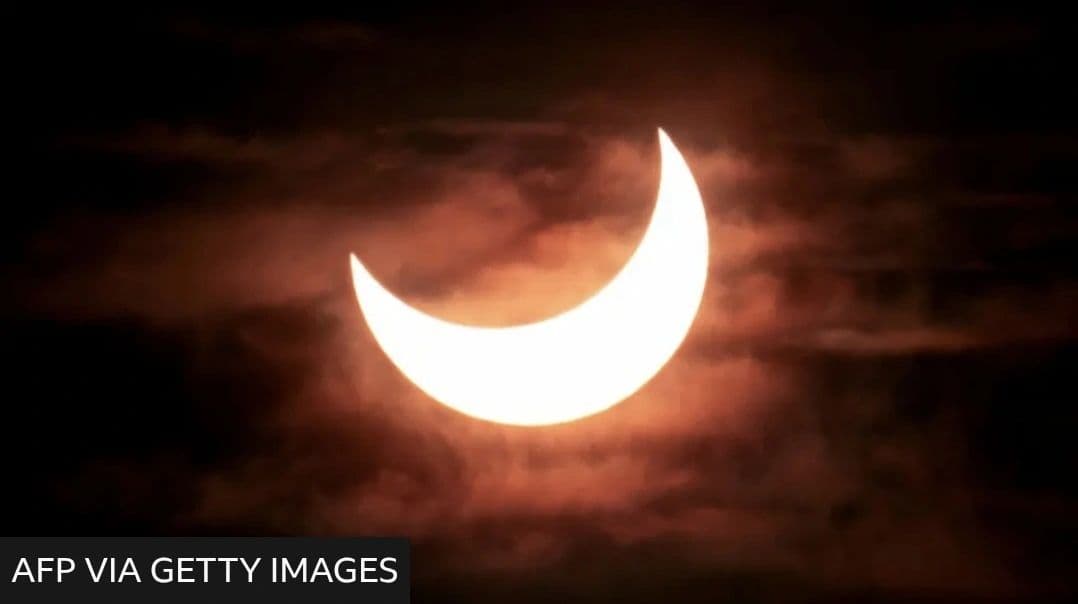
As we witness a solar eclipse today, it brings to mind a fascinating story from the life of the Prophet Muhammad, one that I think has something to say to all of us, Muslim or not.
Nearly 1,400 years ago, in 632 CE, towards the end of Muhammad’s life, his young son Ibrahim died.
At around the same time, on 27 January 632 CE, a solar eclipse occurred in Madinah, where Muhammad lived.
In Arabian society, as in many ancient cultures, unusual natural phenomena could be associated with the birth or death of significant people.
So when the eclipse occurred, people began saying that the sun had eclipsed because Ibrahim, the Prophet’s son, had died.
Muhammad was a religious leader whose message was still being established. Many had rejected and opposed him. Yet people were now interpreting an extraordinary event in the heavens as being connected to his own family.
Think about the opportunity this presented.
He could have used it to reinforce his own status, by supporting their claims or by remaining silent.
Instead, he immediately corrected them.
He pronounced: “The sun and the moon are two signs of God. They do not eclipse because of the death or life of anyone.”
He then directed people towards prayer and reflection.
I find this amazing.
He corrected superstition and misinformation even when it benefited him, and he did so while grieving the death of his own child.
There is surely a lesson here for leadership in our own time.
Political, religious and organisational leaders will encounter crises, tragedies or public fears that can be exploited to gain support, strengthen authority, attack opponents or increase popularity.
The temptation is not always to tell a lie. Sometimes it is simply not to correct a convenient untruth.
Muhammad chose differently.
Truth mattered more than gaining followers, and principle mattered more than personal advantage. Even more astonishingly, grief did not become an excuse to abandon integrity.
Good leadership is not only about telling the truth when it helps you. It is about defending the truth when the falsehood would have helped you more.
So, as stargazers and eclipse chasers travel the world today searching for the perfect place to witness this remarkable event, perhaps there is another lesson worth keeping in our sights.
In our excitement to see an eclipse clearly, let us not lose our focus on something even more important: seeing truth clearly.
When something is true, let us have the courage to acknowledge it and speak it, even when inconvenient.
When something is false, let us have the integrity to challenge it and speak up, even when that falsehood benefits us.
Almost 1,400 years ago, at a moment of profound personal grief, that was the example Muhammad ﷺ gave.
May we never allow personal interest, popularity or opportunity eclipse the truth.
WhatsApp updates
Be notified when something new is published
Join our WhatsApp broadcast list for a short message whenever a new article, Q&A answer or lecture goes live. Updates only - no group chat, and your number is never shared.
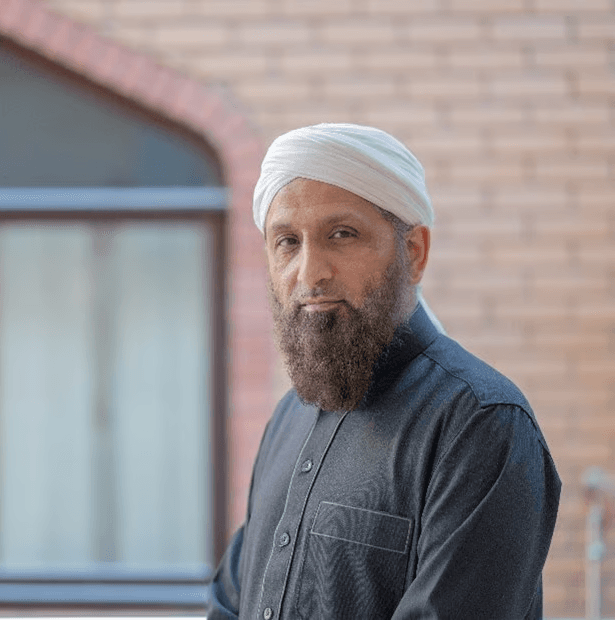
Shaykh Yunus Dudhwala
NHS hospital chaplain of 28 years, Islamic scholar, speaker and writer.
More about Shaykh Yunus →