
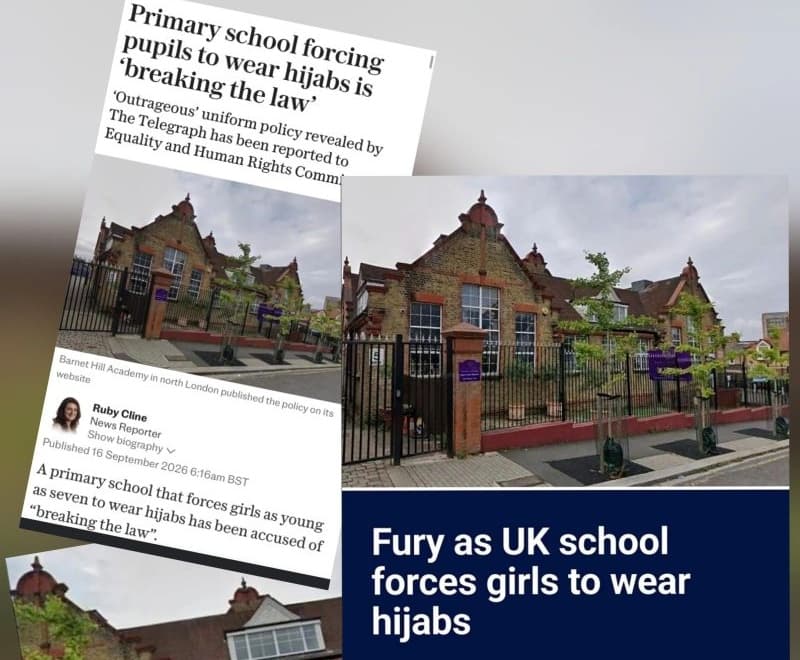
Over recent weeks, I kept seeing headlines and hearing debates about Barnet Hill Academy, a Muslim primary school in North London: “Muslim school forces girls as young as seven to wear hijab.”
My initial reaction was one of concern.
I do not believe a seven-year-old girl should be forced to wear hijab as a condition of attending school. Appropriate dress during religious worship is one thing; compelling a child to cover her hair throughout the school day is another.
So rather than simply reacting, I decided to look into it. I made enquiries with someone connected to the school and checked what Barnet Council and the Government had actually said.
What I found was rather different from the headlines.
Seven-year-old girls are not compelled to wear hijab throughout the school day at Barnet Hill Academy.
Barnet Council stated that during its visits “it was evident that not all Key Stage 2 girls were wearing hijabs during class activities” and clarified that the school does not insist on hijab “apart from during acts of worship.”
When the issue reached Parliament, the Education Secretary also said the Government had been in contact with the school and understood that “hijabs are not compulsory.”
So how did we get from there to these headlines?
To be fair, the school’s website could be more clearer. It lists a white hijab for KS2 girls and says it is not required for non-Muslim pupils.
But unclear wording should not be an excuse for sensational misleading headlines.
There is also a question of consistency. State-funded faith schools incorporate their religious ethos into school life and uniform. In Barnet itself, Jewish faith schools include religious attire such as the kippah and tzitzit.
People are entitled to different views about the hijab. But those views should not become a reason to portray a Muslim school as coercive when the evidence does not support it.
For weeks the public has been presented with a powerful image:
Muslim school. Seven-year-old girls. Forced hijab. Oppression.
In a climate of rising anti-Muslim hate, this is where questions of structural Islamophobia arise. It isn't only about individual abuse. It can also involve institutional and public narratives that disproportionately place Muslims and Muslim institutions under suspicion.
Muslim schools should absolutely be scrutinised. But scrutiny should be accurate, evidence-based and consistent with that applied to other faith schools.
After all these headlines, perhaps we should ask the simplest question:
Were seven-year-old girls actually being forced to wear hijab?
The evidence says no.
Sometimes it pays to look beyond the headline.
WhatsApp updates
Be notified when something new is published
Join our WhatsApp broadcast list for a short message whenever a new article, Q&A answer or lecture goes live. Updates only - no group chat, and your number is never shared.
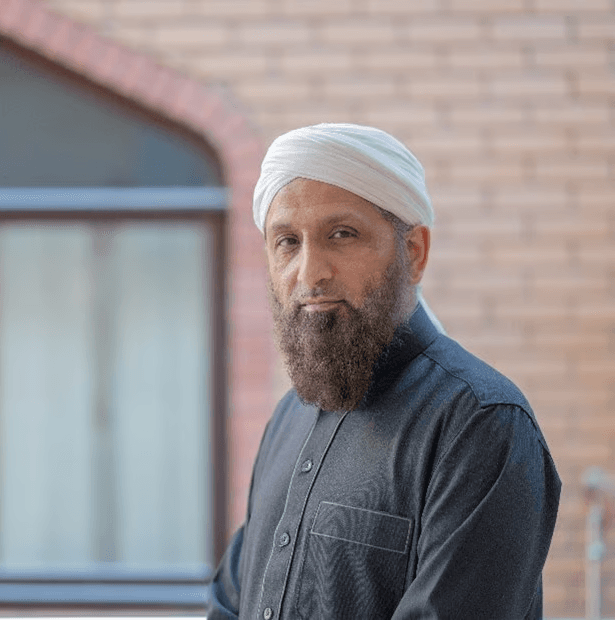
Shaykh Yunus Dudhwala
NHS hospital chaplain of 28 years, Islamic scholar, speaker and writer.
More about Shaykh Yunus →