Trafalgar Square Iftar - Act of Domination?
Beyond the Headlines!
3/20/20262 min read
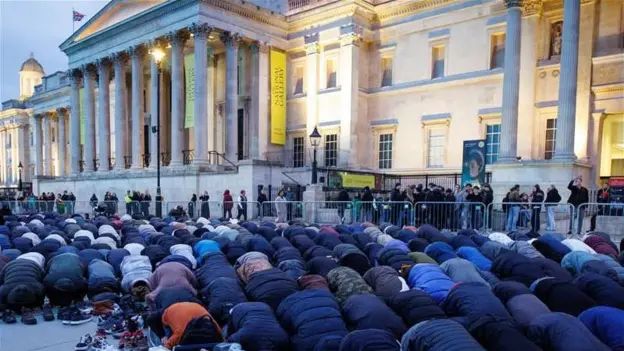
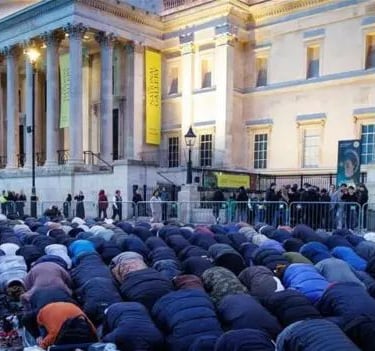
In 1930's Nazi Germany, acts of faith were reframed as acts of domination. We know where that kind of rhetoric ultimately led.
Recent comments by Nick Timothy (Conservative MP & Shadow Justice Secretary) describing Muslims praying in public as “an act of domination” should concern anyone committed to fairness, cohesion, and genuine British values.
History teaches us to be extremely careful with such language.
In the 1930s, far-right movements in Nazi Germany portrayed Jewish religious practices in public not as freedom of worship, but as provocation, subversion, and a threat to national identity. Acts of faith were reframed as acts of domination.
No one is equating contexts, but the pattern of language is worth reflecting on. To characterise Muslim prayer, whether in a mosque or a public space, as something “not welcome” risks sending a deeply harmful message: that there is no acceptable way for Muslims to visibly belong.
Keir Starmer was right to challenge this in Parliament. The response from Kemi Badenoch, however, raises serious questions about the standards we expect from those in leadership.
What is particularly concerning is how this rhetoric is received by young British Muslims. As one young voice recently expressed, this is not just about disagreement, it creates a sense that their very identity, their prayer, and their presence are being positioned as incompatible with “British values.” That is a dangerous place for any society to go.
When people are repeatedly told they do not belong, the consequences are not abstract. Alienation grows. Trust erodes. Social cohesion weakens.
London, under Sadiq Khan, has shown a different model, one where Ramadan iftars, Easter, Diwali, Vaisakhi, and Chanukah all take place in shared public spaces. That is not domination. That is what a confident, inclusive society looks like.
As someone working closely with diverse communities, we learn how to share space with confidence and respect, and wear our faith proudly in our organisations, without proselytising, or preaching. I see daily the role faith plays in fostering compassion, service, and resilience, particularly in our hospitals and during life’s most difficult moments.
We should be clear:
Respecting religious expression in public life is not a threat to our values, it is a reflection of them.
hashtag#CommunityCohesion hashtag#FaithInPublicLife hashtag#Inclusion hashtag#Leadership hashtag#Respect