Hijab didn't fail Sara - systems did
Beyond the Headlines - Safeguarding
ARTICLES
11/18/20252 min read
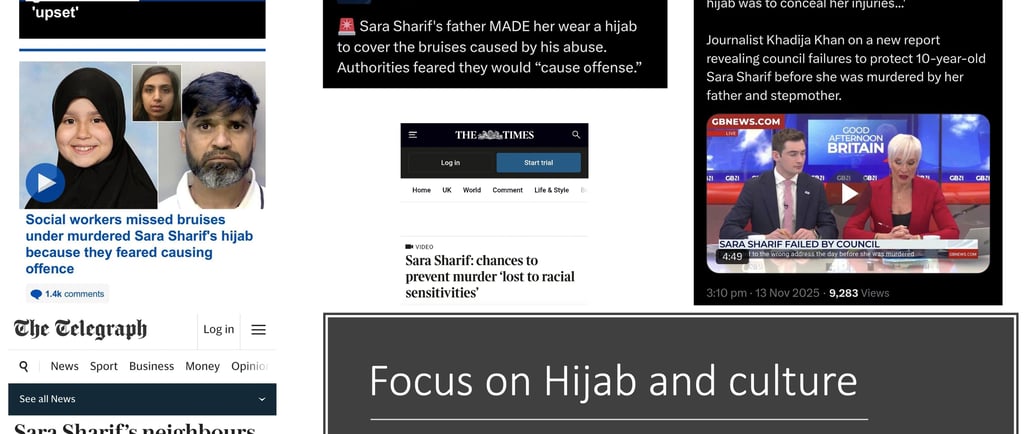
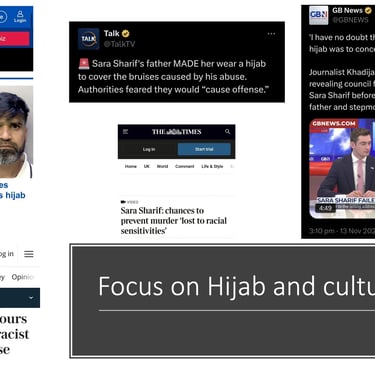
A damning report into the murder of 10-year-old Sara Sharif by her father and step-mother was published yesterday.
It found Sara was failed by the authorities. She was placed into the care of her father and stepmother despite authorities knowing she was at risk of abuse. She had previously been attacked with a cricket bat, metal pole and burnt with an iron.
Sara Sharif was not killed because of her hijab or her culture, yet when you read some of the headlines and coverage from certain news outlets, you would think hijab and fear of being called racist were the key issues.
What these headlines do is deliberately shift the narrative away from:
❌ the catalogue of safeguarding failures
❌ the known history of abuse
❌ a welfare visit sent to the wrong address just 24 hours before her death
❌ the systemic issues that urgently require accountability
And instead directs attention to a manufactured debate about whether a 10-year-old Muslim girl should wear a hijab.
This is not accidental. It is a familiar tactic: using a tragedy to fuel suspicion of Islam and distract from systemic institutional failings.
Let’s be clear:
• The hijab did not fail this child.
• Islam did not fail this child.
• Culture did not fail this child.
Her father and stepmother killed her. Their actions were evil, full stop.
But the authorities also failed her through poor information-sharing, missed warning signs, and critical errors that had more to do with systemic failures and little to do with culture.
Because some media have dragged culture into the discussion, those points do need addressing:
🔸 “Honour” cannot excuse harm - no faith or culture permits abuse.
🔸 Over-sensitivity is not cultural competence - avoiding essential checks out of fear of causing offence puts children at risk.
🔸 Fear of being labelled racist must never silence reporting - safeguarding relies on courage, not hesitation.
These cultural elements should not overshadow the central issue: systemic failures exposed a child to danger. But they do highlight the importance of practising cultural sensitivity without compromising safety.
For me, the lessons are clear:
✅ Child safety always comes first
✅ Cultural awareness must strengthen practice, not weaken it
✅ Anti-racism includes protecting minority children with confidence and urgency
✅ Safeguarding systems must be robust, consistent, and accountable
Sara’s death is a tragedy that should shake every one of us. We honour her by ensuring cultural sensitivity never becomes cultural paralysis and by demanding reform, and integrity so no child falls through the cracks again.
Sara deserves better than to have her memory used for culture-war politics.